Apologies for the long answering delay caused by the summer holidays.
> 2) the --repair option, which helps me trim the GTFS file to the small network I have.
Option --repair only takes effect when running with option --osm-routes. The recommended workflow uses osm stops (with option --stops) instead of option --osm-routes.
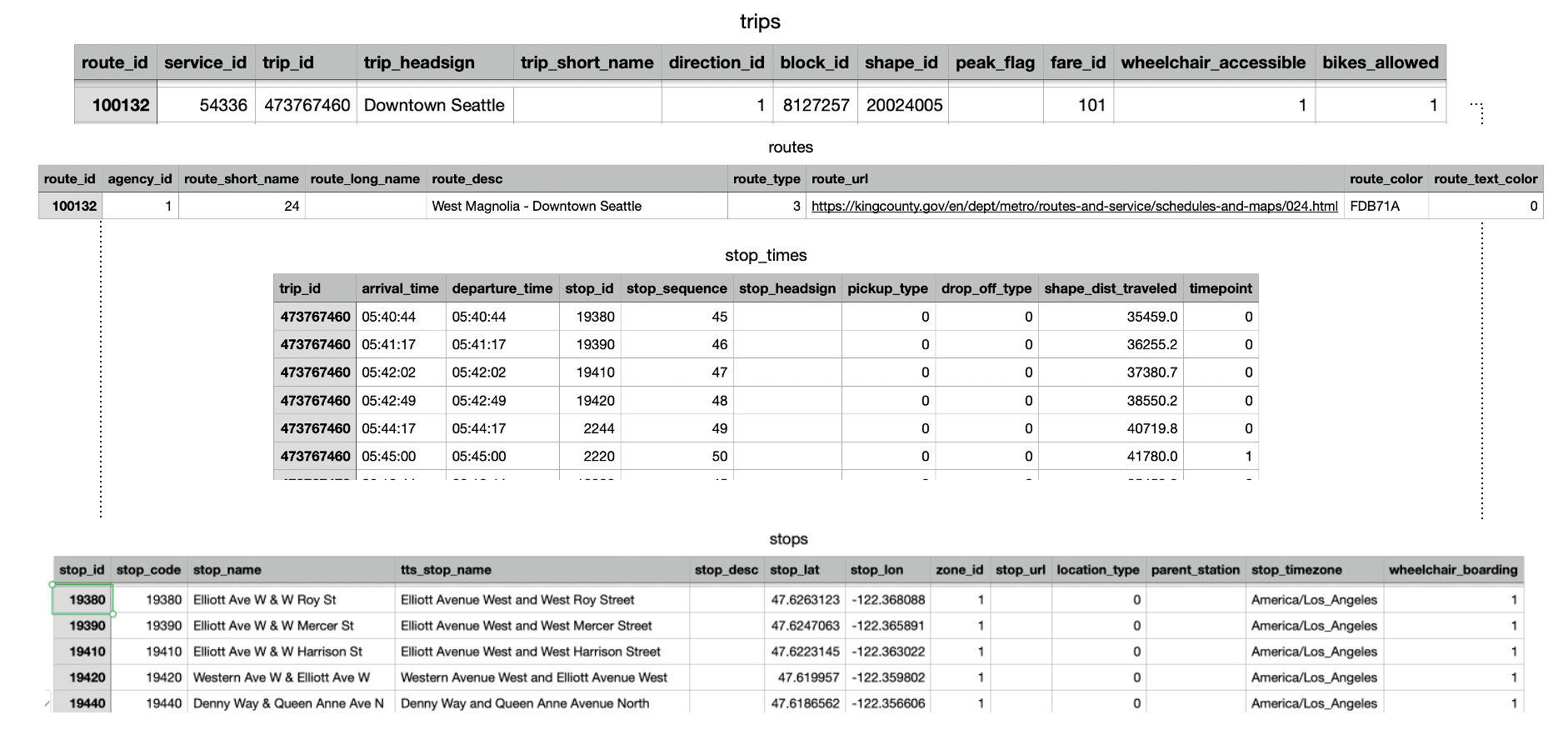
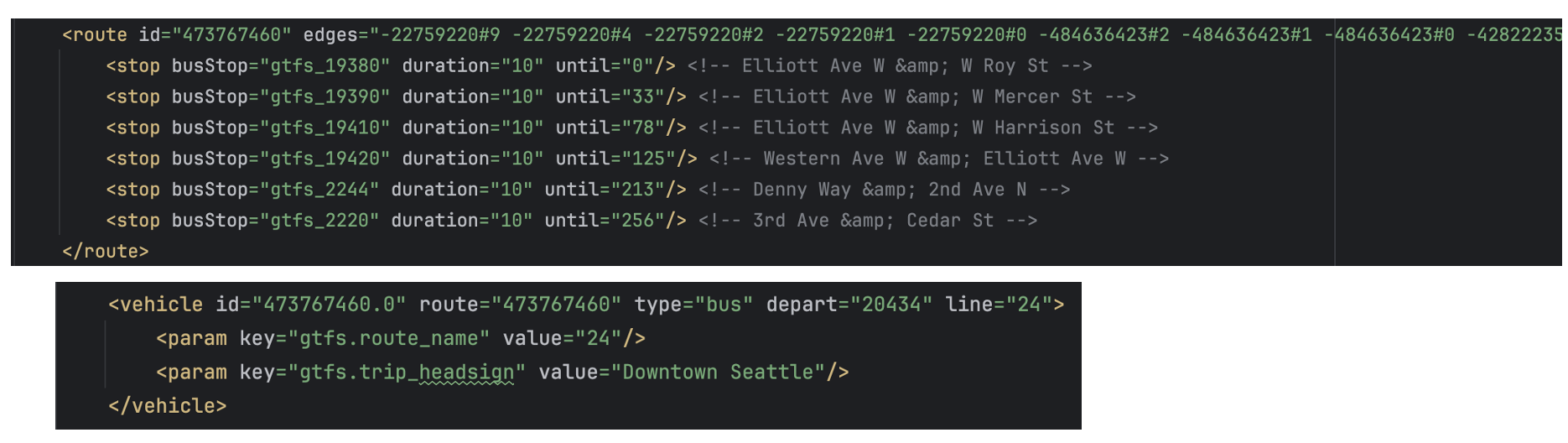
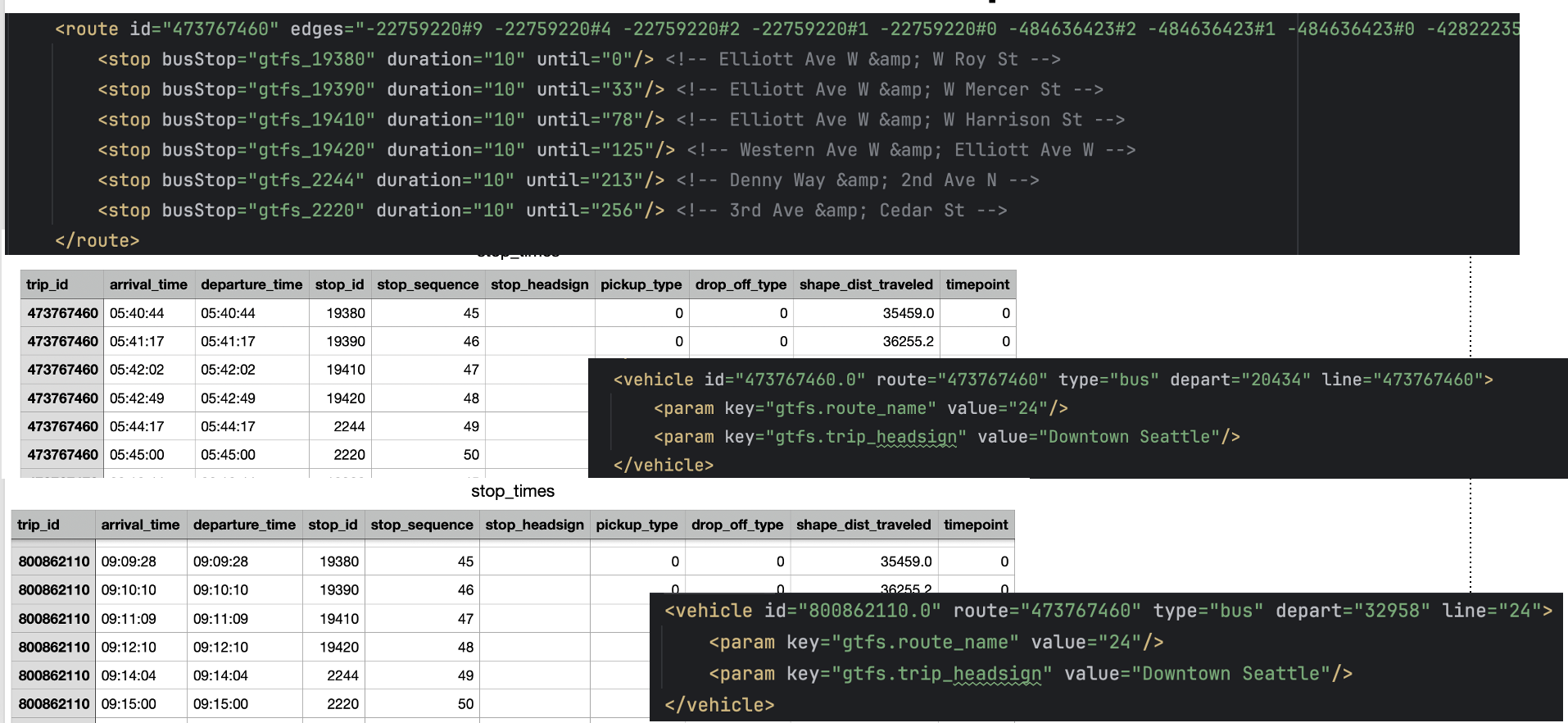
> Consequently, it seems that the 'until' parameter in the route only
refers to that of the first trip. However, in other trips from the same
route, timings could be different.
I agree. It seems we currently do not test/account for the fact that the same sequence of stops could schedule different timings within the trip.
> Moreover, the times in the
gtfs2pt output seem to be global times in the simulation and are not
exact arrival/departure times in HH:MM:SS or simulation time in seconds.
Could you clarify if that is the case or if the until parameter refers
to the time relative to the departure time of a trip?
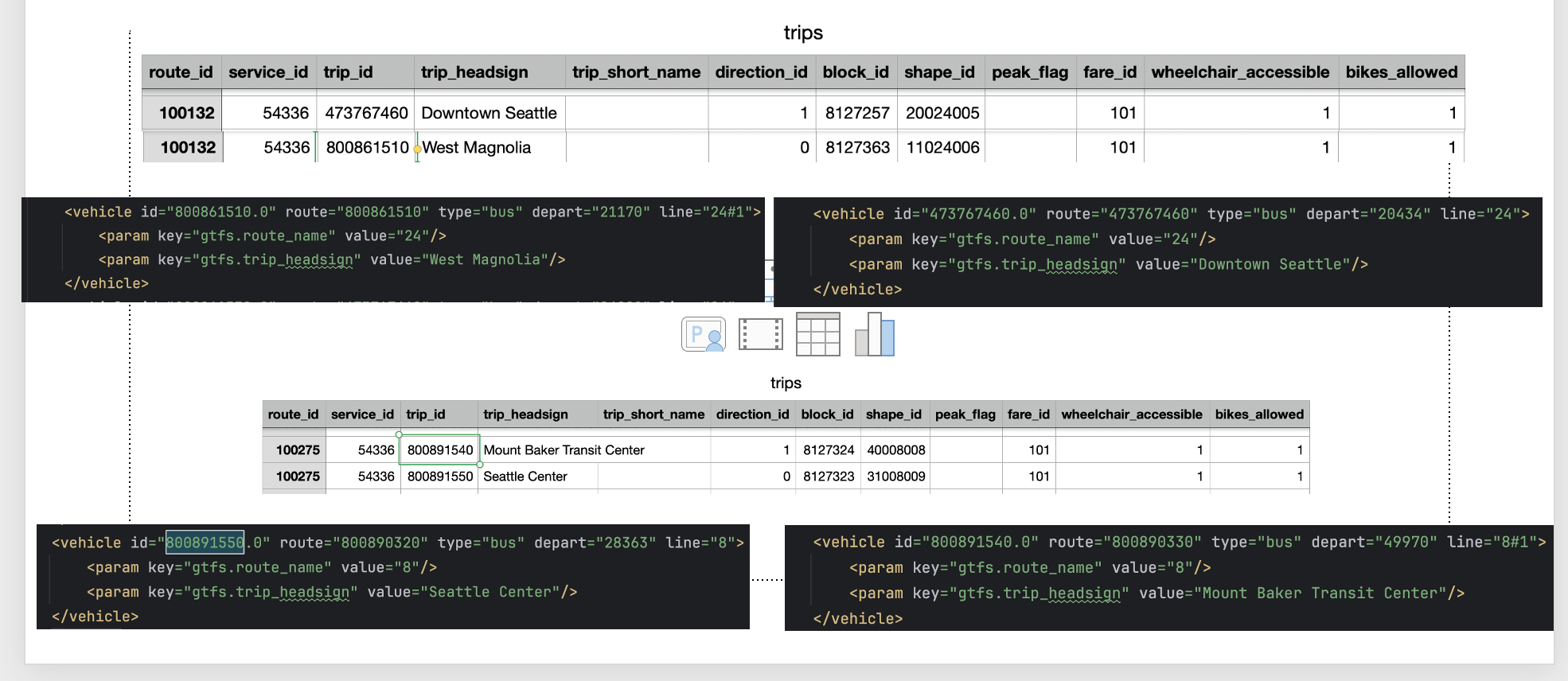
> I also noticed some ambiguity in how 'line's are coded. In the example
below, you can see that for one route dircetion_id=1 is mapped to
line=24 and direction_id=0 is mapped to line=24#1, but vice versa for
another route. Could you please clarify how # is handled when generating
gtfs2pt outputs?
The assignment of sub_indices to distinguish both directions of the same line (or different stop sequences that have the same line id in GTFS), only uses the order of appearance in the GTFS files
The 'direction' field is not evaluated.
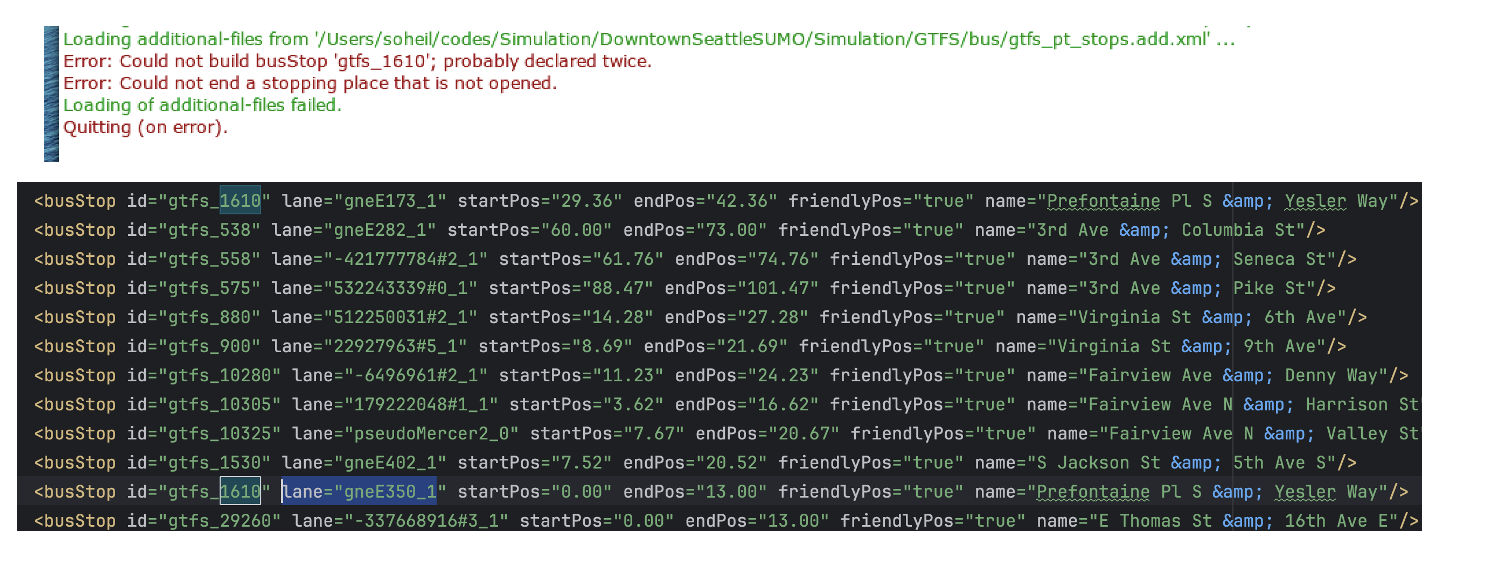
> - Lastly, using --use-gtfs-stopids
may cause busStops with duplicate IDs, which will later cause the
simulation to crash while loading the configuration file. For now, I am
removing one of the stops to run the simulation but may I know the
underlying issue causing this behavior?
regards,
Jakob