Skip to content
Eclipse Events
    • View my account
    • Edit my account
    • Manage cookies
  • Download
  • Join us
    • Membership
      • Become a member
      • Review membership fees
      • Access member portal
    • Sponsorship
      • Support us as a sponsor
    • Contribute
      • How to contribute
      • Committer training
    • Collaborate with us
      • Join an existing industry collaboration
      • Start a new collaboration
  • What we do
    • Projects
      • Explore projects
      • View specifications
    • Industry collaborations
      • Explore collaborations
      • Join a working group
      • Join an interest group
      • Read success stories
    • Core services
      • Explore core services
      • Ensure project security
    • Key initiatives
      • Embedded & IoT
      • Enterprise Java
      • Data sovereignty
      • Security & privacy
      • Developer tools & IDEs
      • AI & emerging technologies
      • Automotive & mobility
      • Policy & compliance
    • Strategic services
      • Transform research into open source
      • Engage professional services
      • Build your OSPO
  • Resources
    • What's happening
      • Read our blog
      • Join mailing lists
      • Get news updates
      • Subscribe to newsletter
      • Explore OSS global voices
    • Events
      • Explore events
      • Join a community meetup
      • Attend a webinar
      • Join OCX
    • Developer resources
      • Explore projects hub
      • Attend office hours
      • Report a vulnerability
      • View known vulnerabilities
      • Use the security handbook
    • Industry insights
      • View case studies
      • View whitepapers
      • View surveys & reports
    • Marketplaces
      • Adoptium
      • Eclipse IDE
      • Open VSX
  • About us
    • The Foundation
      • About
      • Meet the team
      • Board & governance
    • Our members
      • Become a member
      • View member directory
      • Access member portal
    • Sponsorship
      • Become a sponsor
      • Sponsor directory
    • More
      • Join our team
      • Explore our brand
      • Contact us

Membership

  • Become a member
  • Review membership fees
  • Access member portal

Sponsorship

  • Support us as a sponsor

Contribute

  • How to contribute
  • Committer training

Collaborate with us

  • Join an existing industry collaboration
  • Start a new collaboration

Projects

  • Explore projects
  • View specifications

Industry collaborations

  • Explore collaborations
  • Join a working group
  • Join an interest group
  • Read success stories

Core services

  • Explore core services
  • Ensure project security

Key initiatives

  • Embedded & IoT
  • Enterprise Java
  • Data sovereignty
  • Security & privacy
  • Developer tools & IDEs
  • AI & emerging technologies
  • Automotive & mobility
  • Policy & compliance

Strategic services

  • Transform research into open source
  • Engage professional services
  • Build your OSPO

What's happening

  • Read our blog
  • Join mailing lists
  • Get news updates
  • Subscribe to newsletter
  • Explore OSS global voices

Events

  • Explore events
  • Join a community meetup
  • Attend a webinar
  • Join OCX

Developer resources

  • Explore projects hub
  • Attend office hours
  • Report a vulnerability
  • View known vulnerabilities
  • Use the security handbook

Industry insights

  • View case studies
  • View whitepapers
  • View surveys & reports

Marketplaces

  • Adoptium
  • Eclipse IDE
  • Open VSX

The Foundation

  • About
  • Meet the team
  • Board & governance

Our members

  • Become a member
  • View member directory
  • Access member portal

Sponsorship

  • Become a sponsor
  • Sponsor directory

More

  • Join our team
  • Explore our brand
  • Contact us

Eclipse SAAM Mobility 2021

Security, AI, Architecture and Modelling for next generation Mobility | Virtual Conference | June 15 - 16, 2021

  1. Home
  2. Events
  3. 2021
  4. Eclipse SAAM Mobility 2021

The SAAM Mobility conference is now over! Thank you for your interest and attendance!

The conference proceedings are available on the CEUR portal.

You can also enjoy the video recordings and slides of the talks. Check the Agenda section.


About the Event

Increasingly autonomous, connected, intelligent and sustainable mobility in the future societies requires drastic software innovations that cross several research and innovation domains. This contributes to the rapid digitalization of contemporary societies. Current scenarios are characterized by constantly increasing demands of managing complex software constellations, rapid development cycles, while retaining high quality requirements for functional and non-functional requirements alike. A multitude of novel technologies – such as Edge Computing, Artificial Intelligence, Big Data Analytics, Digital Twins, and Security, Privacy, and Trust Schemes – are being investigated in order to be adopted in the current ecosystem-wide arrangements, standards, and tool chains. The role of open source software and tool chains, such as OpenADx, is also emerging powerfully. Hence, designing, managing, and governing the next generation systems, software and services for the future autonomous and connected mobility solutions is set to become even more complex.

  • Code of Conduct

Speakers

Andreas Riexinger

Andreas Riexinger

Robert Bosch GmbH, Keynote

Robert Hilbrich

Robert Hilbrich

DLR, Keynote

Alessandra Bagnato

Alessandra Bagnato

Softeam Software

Eija Hämäläinen

Eija Hämäläinen

Oulu Automotive Cluster, Sponsor

Philipp Heisig

Philipp Heisig

IDiAL Institute of FH Dortmund

Harri Hirvonsalo

Harri Hirvonsalo

CSC - IT Services for Science Ltd

Deniz Memis

Deniz Memis

Eteration

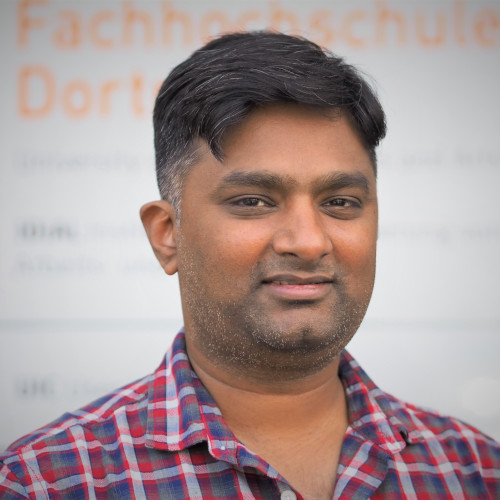
Anand Prakash

Anand Prakash

Dortmund University of Applied Sciences and Arts

Mikko Rajanen

Mikko Rajanen

INTERACT Research Unit - University of Oulu

Muralikrishna Thulasi Raman

Muralikrishna Thulasi Raman

Itemis AG

Mikael Saarinen

Mikael Saarinen

University Of Oulu

Sebastian Schildt

Sebastian Schildt

Robert Bosch Corporate Research

Pertti Seppänen

Pertti Seppänen

University Of Oulu

Marc Zeller

Marc Zeller

Siemens Technology

Proceedings

The conference proceedings are available on the CEUR portal.

You can also enjoy the video recordings and slides of the talks. Check-out the Agenda section

Technical topics of interest

Security and Privacy for Mobility

Security and Privacy for Mobility

Artificial Intelligence for Mobility

Artificial Intelligence for Mobility

Architecture for Mobility

Architecture for Mobility

Modelling for IoT

Modelling for Mobility


Note:

Security icon by Fauzan Adiima, from the Noun Project
Artificial Intelligence icon by priyanka, from the Noun Project
Architecture icon by HeadsOfBirds from the Noun Project
Tree icon by Gacem Tachfin, from the Noun Project

Agenda

Legend

  •   Keynote
  •   Session
  •   Demo
  •   Poster
  •   Sponsor
  • Day 1 -- Tuesday, June 15
  • Day 2 -- Wednesday, June 16
Session NamePresenter NameSession RecordingSlides
Keynote Mobility of the Future and Open Collaboration – A good Idea?
PDF: CEUR link

Abstract: Our world is changing, and the change is visible everywhere. More than 50% of the population is living in cities and the cities are growing. More and more goods and people need to be transported, bringing the traffic infrastructure to its limits. Increasing pollution and noise levels bringing the environment to its limits.
To counter this, a transformation of the mobility is needed, who has already started, powered by new technologies and services. The mobility of the future will be electrified, connected, personalized, automated and software defined.
Software is more and more dominating our daily life, also in the automotive world. Almost every function in the vehicle is defined by software. Autonomous Driving solutions introduce a new complexity into the development of embedded systems in the vehicle. This complexity rises with each level of control and autonomy of the automated driving systems and you need deeper expertise and more software. Software is more and more becoming an important differentiator for autonomous vehicles. Increasing embedded software complexity with an increase in level of automation is putting new demands on the existing tools and frameworks. Instead of solving these challenges alone, partnering in non-differentiating areas and collaborating is the path forward.

Andreas RiexingerSession video for session Mobility of the Future and Open Collaboration – A good Idea? Session slides for session Mobility of the Future and Open Collaboration – A good Idea?
Session Context Aware Software Stacks for Mobility: Composive.ai Overview
Paper: CEUR link

Authors: Naci Dai, Deniz Memis and Burak Saglam

Abstract: Humans are very good at adapting to and driving in very different conditions and environments. Complex AI based software such as Autonomous vehicles (AV) are biased by the training data and they do not do well in different contexts. Environment perception and context awareness can be used to adapt and deploy complex networks of AI systems that are expected to perform safely on many different environments and edge cases. Typical Autonomous Drive (AD) software stacks provide localization, object detection and tracking using an array of sensor data. Additional sources of information such as V2X connectivity, passenger behavior, person-to-device mapping, urban context, degradation of traffic etc. complements the sensor data that can be used to describe a context. This context is used to predict and adapt the system of software and applications that are deployed to the vehicle.
Context Aware Software Stack for Mobility (CASSM) describes a model based approach for definition of a software stack for complex systems such as those found in autonomous vehicles. Machine Learning is used to detect a context and adapt the software stack, which can then be used to identify and deploy services to autonomous vehicles. CASSM will be an open source in-vehicle delivery of context-driven services and applications. This paper describes an architecture to define context-aware personalized & dynamically provisioned capabilities, applications & services to autonomous vehicles.

Deniz MemisSession video for session Context Aware Software Stacks for Mobility: Composive.ai Overview Session slides for session Context Aware Software Stacks for Mobility: Composive.ai Overview
Session APP4MC RaceCar: A Practical ADAS Demonstrator for Evaluating and Verifying Timing Behavior
Paper: CEUR link

Authors: Anand Prakash, Lukas Krawczyk and Carsten Wolff

Abstract: The computational demands of safety critical ADAS applications on autonomous vehicles have been ever-increasing. As a result, high performance computing nodes with varying operating frequencies, and inclusion of different sensors have been introduced, which has resulted in introduction of heterogeneous architectures with high complexity. This complexity has led to challenges in analysing a system’s timing behavior, such as determining the end-to-end response time of high-level functionality as well as a real-time application’s latency. The existing approaches in analysing the timing behavior of an ADAS application does not address the overall end-to-end response time. It is also worth mentioning that a practical timing verification of an ADAS in a real-life scenario is still an open issue.
This talk provides an overview of the existing RC car platforms along with its comparison to the proposed RC car demonstrator platform. It focuses on the model based architectural design of RC car demonstrator as well as the event-chain task model, which is coarsely based on Waters Challenge 2019. Further, it lays emphasis on deriving the timing parameter metrics from the generated trace file, which can be used to evaluate the system behavior against the timing requirements. Finally, the talk concludes with the importance on designing an ADAS with a model-based approach. This will enable a better, faster and modular analysis of a safety critical ADAS application.

Anand PrakashSession video for session APP4MC RaceCar: A Practical ADAS Demonstrator for Evaluating and Verifying Timing Behavior Session slides for session APP4MC RaceCar: A Practical ADAS Demonstrator for Evaluating and Verifying Timing Behavior
Sponsor Co-creating automotive innovations

Abstract: How ecosystem work accelerates research and development between OEMs and SMEs?

Oulu Automotive Cluster helps automotive brands design and develop sustainable electric and autonomous cars to meet new business models. With 110 companies and 33 research, development and education organizations, the cluster is one of the fastest growing ecosystems in Finland. Oulu Automotive Cluster is run by BusinessOulu, the business development agency of City of Oulu. www.automotive.oulu.com

Eija HämäläinenSession video for session Co-creating automotive innovations Session slides for session Co-creating automotive innovations
Demo PANORover: Autonomous Driving System Development Platform
Paper: CEUR link

Authors: Marc Zeller, Olexiy Kupriyanov and Norbert Beck

Abstract: The complexity of heterogeneous embedded systems as well as the introduction of AI-based functions to realize ADAS or autonomous driving features pose new challenges for the safety assessment process. In this demo, we illustrate the analysis of a complex system in terms of function safety (ISO 26262) and Safety Of The Intended Functionality (SOTIF, ISO 21448) with the model-based Component Fault Tree (CFT) methodology using a self-driving toy vehicle (the PANORover).

Marc ZellerSession video for session PANORover: Autonomous Driving System Development Platform Session slides for session PANORover: Autonomous Driving System Development Platform
Session Benefits of Usability and User Experience in Automated Driving
Paper: CEUR link

Author: Mikko Rajanen

Abstract: This paper proposes a list of potential benefits of better usability and user experience adapted to automated driving and autonomous mobility. These benefits could be useful for understanding and communicating the importance of usability and user experience for the success of automated driving to be accepted by the non-technical public and becoming mainstream and successful. In this paper, the focus is on identifying usability and user experience benefits of human-machine interaction (HMI) in automated driving context. The goal of the paper is to legitimize the usability and the user experience activities in the eyes of the management of automated driving application and HMI development organizations. The user-centered design process focuses on users, their needs and requirements. This paper shows that the benefits of better usability and user experience through user-centered design can be identified in use context as well as application development context through competitive advantage, reduced risks, and reduced development costs.

Mikko RajanenSession video for session Benefits of Usability and User Experience in Automated Driving Session slides for session Benefits of Usability and User Experience in Automated Driving
Session NamePresenter NameSession RecordingSlides
Keynote The Importance of Open Simulators and AI in a Changing Mobility Landscape
PDF: CEUR link

Abstract: The mobility landscape is undergoing significant changes. More and more mobility providers compete for customers with their own mobility services. Traditional public transport, demand responsive transport, taxis, car sharing, ride pooling, bike sharing, e-scooters, … the available modes of transport in cities are becoming increasingly heterogeneous and confusing. At the same time, significant changes to the landscape are induced by the effects of the global pandemic. They may lead to even more drastic changes in the mobility demand.

How to tame the complexity of this landscape and fight the climate change without neglecting mobility as a fundamental human need is an open - albeit essential - question.

In this talk, we will examine the changes in the mobility landscape and look at the role of two important players in this discussion: open simulators and artificial intelligence. What do they bring to the table in order to tackle the rising complexity? How can they be applied to improve the transportation system in a city? The Eclipse SUMO project is used as an example to illustrate how to build digital twins of smart cities. Moreover, results from recent research projects are used to discuss the effectiveness and efficiency of applying artificial intelligence to optimize transportation systems.

Robert HilbrichSession video for session The Importance of Open Simulators and AI in a Changing Mobility Landscape Session slides for session The Importance of Open Simulators and AI in a Changing Mobility Landscape
Session Eclipse KUKSA.val for SCR Anti-Tampering Monitoring in Heavy Vehicles
Paper: CEUR link

Authors: Junhyung Ki, Sebastian Schildt, Andreas Hastall, Sven Erik Jeroschewski and Robert Höttger

Abstract: Modern internal combustion engines have several advanced exhaust treatment systems to meet emission standards and legislation. In case of Selective Catalytic Reduction (SCR) for diesel engines, a catalyst (“AdBlue®”) is used as consumable. This incurs costs for the operator of diesel vehicles and provides an incentive to unlawfully circumvent and shut down those systems. This case study presents how the Eclipse KUKSA stack has been used to realize an anti-tampering system for commercial heavy-duty trucks exhaust systems. We show how the in-vehicle KUKSA.val software and the KUKSA.cloud components can be used to collect relevant data from a real heavy-duty truck and send them to the cloud for further analysis.

Sebastian SchildtSession video for session Eclipse KUKSA.val for SCR Anti-Tampering Monitoring in Heavy Vehicles Session slides for session Eclipse KUKSA.val for SCR Anti-Tampering Monitoring in Heavy Vehicles
Session On deployment of Eclipse Kuksa as a framework for an intelligent moving test platform for research of autonomous vehicles
Paper: CEUR link

Authors: Harri Hirvonsalo and Pertti Seppänen

Abstract: In this study, we explored how the Eclipse Kuksa framework could be used as a technology basis for building an intelligent moving test platform to support research of autonomous vehicles and vehicle related research in general. Based on the gained experience, we state that Kuksa framework is a feasible basis for development of open, intelligent automotive data systems, though with a considerable learning needs. We present the experience gained during this study and demonstrate some of the functionality provided by a minimum-viable system we implemented in the study.

Pertti Seppänen,
Harri Hirvonsalo
Session video for session On deployment of Eclipse Kuksa as a framework for an intelligent moving test platform for research of autonomous vehicles Session slides for session On deployment of Eclipse Kuksa as a framework for an intelligent moving test platform for research of autonomous vehicles
Poster Hono™ service stack deployment to Azure

Authors: Mikael Saarinen and Niina Lundén

Abstract: Hono™ service stack deployment to Azure was a student project by the SMADYASP (Smart Autonomous Driving Yet Another Student Project) group, in which the goal was to create cloud infrastructure architecture for mobility applications. Microsoft Azure was used as the cloud platform, and deployment was done using Terraform, Helm, and Kubernetes. With the results of the project, it is now much easier to deploy Hono™ and monitor and trace the whole service stack. In the future, this project's results are used in setting up a test environment for real automotive scenarios concerning in-vehicle and 5G connectivity mobility applications.
Source: https://github.com/smaddis/smad-deploy-azure
Demo video:
https://youtu.be/SF46X0i_hJU

Demo: Conference handout - not for distribution

Mikael SaarinenSession video for session Hono™ service stack deployment to Azure Session slides for session Hono™ service stack deployment to Azure
Session Algorithmic Planning, Simulation and Validation of Smart, Shared Parking Services using Edge Hardware
Paper: CEUR link

Authors: Muralikrishna Thulasi Raman, Andreas Graf, Benedikt Niehues and Marco Aiello

Abstract: A major problem with vehicles used in densely populated areas is parking. Part of the problem is the scarcity of the resource in busy areas and the non optimal utilization of private spots. We propose the 'Smart Shared Private Parking' model that aims at including in the parking pool also private parking spots. In an urban area with both commercial and residential buildings, frequently household owners do not utilize their own parking lots during office hours, long duration of shopping and vacations. At the same time, such owners want to be able to park in their lots when needed. Therefore, to engage the residents and allow them to provide their parking spaces when unused one needs a real-time, distributed infrastructure that supports dynamic allocation of spaces. We propose a conceptual deployment of edge hardware and communication mechanisms to enable shared private parking sharing. We illustrate an infrastructure setup required to analyse various aspects of the model and show its effectiveness in parking allocation in terms of vehicular emission, utilisation rate, and revenue as metrics considering all the stakeholders. A simulation based on a district of Dublin provides quantitative instances for these metrics.

Muralikrishna Thulasi RamannSession video for session Algorithmic Planning, Simulation and Validation of Smart, Shared Parking Services using Edge Hardware Session slides for session Algorithmic Planning, Simulation and Validation of Smart, Shared Parking Services using Edge Hardware
Session Towards a Domain-specific Language for the Virtual Validation of Cloud-native Mobility Services
Paper: CEUR link

Authors: Philipp Heisig and Christoph Flick

Abstract: Future vehicles can be considered as ”IoT devices on wheels” as they exhibit high-performance computation resources, various sensing devices, and a data-driven software architecture. While the availability of automotive big data provides the basis for innovative and disruptive mobility services, processing vehicle data within the cloud poses also several challenges. A major challenge in this context is the validation of cloud-native mobility services regarding their proper functionality and the fulfillment of non-functional requirements. Due to the cost-efficient nature of simulations, traffic simulation in combination with network simulation is more and more used for a virtual proof-ofconcept of mobility services and their software architectures. Nevertheless, the creation of adequate simulation environments specific to connected vehicle scenarios is time-consuming and requires explicit domain knowledge. We present a prototypical domain-specific language tailored to the formal description of connected vehicle scenarios and the according generation of simulation environments. Therefore, we make use of the traffic simulator Eclipse SUMO as well as the co-simulation environment Eclipse MOSAIC and demonstrate the usage of our DSL via the use case of a restricted traffic zone. Although the DSL so far only support the setup of minimal traffic scenarios, it already helps to abstract complexity and ease the set-up of simulation environments for connected vehicle scenarios.

Philipp HeisigSession video for session Towards a Domain-specific Language for the Virtual Validation of Cloud-native Mobility Services Session slides for session Towards a Domain-specific Language for the Virtual Validation of Cloud-native Mobility Services
Session Morphemic Cloud Application Models Design
Paper: CEUR link

Authors: Alessandra Bagnato, Etienne Brosse and Kaïs Chaabouni

Abstract: The Morphemic H2020 project (The most advanced multicloud platform with proactive features) covers several features from modelling cross-cloud applications, continuous and autonomous optimization and deployment and providing access to several cloud capabilities. This demo paper describes the MORPHEMIC CAMEL Designer tool responsible for the Cloud Application Modelling and Execution Language (CAMEL) design for the modelling Environment Modelio. CAMEL Designer is an open source module for graphically creating, editing and exporting CAMEL Models in XMI format.

Alessandra BagnatoSession video for session Morphemic Cloud Application Models Design Session slides for session Morphemic Cloud Application Models Design

Technical Program Committee

The Technical Program Committee is an independent panel of expert volunteers and as such will do their best to judge papers objectively and on the principle of a level playing field for all.
  • Karl Andersson, Luleå University of Technology
  • Paolo Azzoni, EUROTECH
  • Alessandra Bagnato, SOFTEAM
  • Ahmad Bani Jamali, University of Oulu
  • Christian Berger, Gothenburg University
  • Benoit Combemale, University of Toulouse, INRIA
  • Maria Teresa Delgado, Eclipse Foundation
  • Marco Jahn, Eclipse Foundation
  • Erik Kamsties, Fachhochschule Dortmund
  • Teemu Karvonen, University of Oulu, M3S Group
  • Markus Kelanti, University of Oulu, M3S Group
  • Lukas Krawczyk, Fachhochschule Dortmund
  • Karl Heinz Krempels, Fraunhofer FIT / RWTH Aachen
  • Zakaria Laaroussi, Ericsson
  • Lucy Ellen Lwakatare, University of Helsinki
  • Yod Samuel Martín, University of Madrid
  • Ralph Mueller, Eclipse Foundation
  • Tero Päivärinta, University of Oulu, M3S Group
  • Ella Peltonen, University of Oulu, UBICOMP
  • Ivana Podnar-Zarko, Univeresity of Zagreb
  • Sowmya Ravidas, TU Eindhoven
  • Jan-Philipp Steghoefer, Gothenburg University
  • Sasu Tarkoma, University of Helsinki
  • Burak Turhan, University of Oulu, M3S Group
  • Alexander Viehl, FZI Forschungszentrum Informatik

Best Paper Award

We are pleased to announce that the SAAM Mobility Best Paper Award for 2021 has been awarded to Junhyung Ki, Sebastian Schildt, Andreas Hastall, Sven Erik Jeroschewski and Robert Höttger for their paper on ‘Eclipse KUKSA.val for SCR Anti-Tampering Monitoring in Heavy Vehicles’.

Best Paper Award

Organizing Committee

The Eclipse SAAM Mobility 2021 conference is co-organized by the Eclipse Foundation and the University of Oulu.

Conference Co-chairs

Pasi Kuvaja, Professor Emeritus, University of Oulu, Finland
Philippe Krief, Eclipse Foundation Europe, France

Program Committee Chair

Tero Päivärinta, University of Oulu, Finland
Teemu Karvonen, University of Oulu, Finland

Publicity

Susan Iwai, Eclipse Foundation Europe, Germany

Co-organized by:

Eclipse Research

Supported by:

Oulu Automotive Cluster

Co-organized by:

University of Oulu

  • Eclipse Foundation
    • About
    • Projects
    • Collaborations
    • Membership
    • Sponsor
  • Legal
    • Privacy Policy
    • Terms of Use
    • Compliance
    • Code of Conduct
    • Legal Resources
  • More
    • Report a Vulnerability
    • Service Status
    • Contact Us
    • Support

See what we're up to

Stay up to date

Subscribe to our newsletter

Eclipse Foundation

Copyright © Eclipse Foundation AISBL. All rights reserved.

  • Privacy policy
  • Terms of use
  • Compliance
  • Legal