Skip to content
Eclipse Events
    • View my account
    • Edit my account
    • Manage cookies
  • Download
  • Join us
    • Membership
      • Become a member
      • Review membership fees
      • Access member portal
    • Sponsorship
      • Support us as a sponsor
    • Contribute
      • How to contribute
      • Committer training
    • Collaborate with us
      • Join an existing industry collaboration
      • Start a new collaboration
  • What we do
    • Projects
      • Explore projects
      • View specifications
    • Industry collaborations
      • Explore collaborations
      • Join a working group
      • Join an interest group
      • Read success stories
    • Core services
      • Explore core services
      • Ensure project security
    • Key initiatives
      • Embedded & IoT
      • Enterprise Java
      • Data sovereignty
      • Security & privacy
      • Developer tools & IDEs
      • AI & emerging technologies
      • Automotive & mobility
      • Policy & compliance
    • Strategic services
      • Transform research into open source
      • Engage professional services
      • Build your OSPO
  • Resources
    • What's happening
      • Read our blog
      • Join mailing lists
      • Get news updates
      • Subscribe to newsletter
      • Explore OSS global voices
    • Events
      • Explore events
      • Join a community meetup
      • Attend a webinar
      • Join OCX
    • Developer resources
      • Explore projects hub
      • Attend office hours
      • Report a vulnerability
      • View known vulnerabilities
      • Use the security handbook
    • Industry insights
      • View case studies
      • View whitepapers
      • View surveys & reports
    • Marketplaces
      • Adoptium
      • Eclipse IDE
      • Open VSX
  • About us
    • The Foundation
      • About
      • Meet the team
      • Board & governance
    • Our members
      • Become a member
      • View member directory
      • Access member portal
    • Sponsorship
      • Become a sponsor
      • Sponsor directory
    • More
      • Join our team
      • Explore our brand
      • Contact us

Membership

  • Become a member
  • Review membership fees
  • Access member portal

Sponsorship

  • Support us as a sponsor

Contribute

  • How to contribute
  • Committer training

Collaborate with us

  • Join an existing industry collaboration
  • Start a new collaboration

Projects

  • Explore projects
  • View specifications

Industry collaborations

  • Explore collaborations
  • Join a working group
  • Join an interest group
  • Read success stories

Core services

  • Explore core services
  • Ensure project security

Key initiatives

  • Embedded & IoT
  • Enterprise Java
  • Data sovereignty
  • Security & privacy
  • Developer tools & IDEs
  • AI & emerging technologies
  • Automotive & mobility
  • Policy & compliance

Strategic services

  • Transform research into open source
  • Engage professional services
  • Build your OSPO

What's happening

  • Read our blog
  • Join mailing lists
  • Get news updates
  • Subscribe to newsletter
  • Explore OSS global voices

Events

  • Explore events
  • Join a community meetup
  • Attend a webinar
  • Join OCX

Developer resources

  • Explore projects hub
  • Attend office hours
  • Report a vulnerability
  • View known vulnerabilities
  • Use the security handbook

Industry insights

  • View case studies
  • View whitepapers
  • View surveys & reports

Marketplaces

  • Adoptium
  • Eclipse IDE
  • Open VSX

The Foundation

  • About
  • Meet the team
  • Board & governance

Our members

  • Become a member
  • View member directory
  • Access member portal

Sponsorship

  • Become a sponsor
  • Sponsor directory

More

  • Join our team
  • Explore our brand
  • Contact us

Eclipse SAM IoT 2020

Virtual Conference | September 17-18, 2020

  1. Home
  2. Events
  3. 2020
  4. Eclipse SAM IoT 2020

The SAM IoT conference is now over! Thank you for your interest and attendance!

The conference proceedings are available on the CEUR portal.

You can also enjoy the video recordings and slides of the talks. Check the Agenda section.


SAM IoT is the first virtual Eclipse Conference on Security, Artificial Intelligence, and Modelling for the next generation Internet of Things

With the ever increasing adoption of IoT technologies in every application domain, we are entering the next evolutionary phase of IoT. The challenge of meeting non-functional requirements such as low latency, high reliability, security and dynamic resource allocation, has led to innovations such as Edge Computing, AI and Analytics, Digital Twin and new security and trust schemes.

These innovations are setting the groundwork for the next generation IoT that will be expressed in projects such as Smart Factories, Smart Cities, Critical Infrastructures, and Cooperative Service Robotics. Researchers in these areas are invited to present their work to participants from the community, industry and standardisation bodies on September 17-18 at the Eclipse SAM IoT Conference.

  • Code of Conduct

Keynotes

Henrik Plate

Henrik Plate

Senior Researcher at SAP

Paul-Emmanuel Brun

Paul-Emmanuel Brun

Innovation & R&T program leader at AIRBUS CyberSecurity

Proceedings

The conference proceedings are available on the CEUR portal.

You can also enjoy the video recordings and slides of the talks. Check-out the Agenda section


Indexed by:

Scopus
Google Scholar
dblp
Semantic Scholar

Technical topics of interest

You can find the details of these topics in the Call for Papers.

Security and Privacy for IoT

Security and Privacy for IoT

Artificial Intelligence for IoT

Artificial Intelligence for IoT

Modelling for IoT

Modelling for IoT


Note: Security icon by Fauzan Adiima, from the Noun Project
Artificial Intelligence icon by priyanka, from the Noun Project
Tree icon by Gacem Tachfin, from the Noun Project

Agenda

Legend

  •   Keynote
  •   Session
  • Day 1 -- Thursday, September 17
  • Day 2 -- Friday, September 18
Session NamePresenter NameSession RecordingSlides
Keynote Cobbles and Potholes – On the Bumpy Road to Secure Software Supply Chains

Open source software is ubiquitous – all across the stack, in the cloud and on-premise, on all devices, in commercial and non-commercial offerings. This success, the dependency of the software industry on open source, combined with recent data breaches and attacks, puts security into the spotlight. This talk will provide an overview - for sure opinionated, hopefully controversial – about the state of affairs and current trends regarding the security of software supply chains, both from consumer and producer perspective.

Henrik Plate, SAPSession video for session Cobbles and Potholes – On the Bumpy Road to Secure Software Supply Chains Session slides for session Cobbles and Potholes – On the Bumpy Road to Secure Software Supply Chains
Session Risk Assessment in IoT Case Study: Collaborative Robots System

Authors:

  • Salim Chehida, Université Grenoble Alpes
  • Abdelhakim Baouya, Université Grenoble Alpes
  • Miquel Cantero, Robotnik Automation S.L.L
  • Paul-Emmanuel Brun, Airbus Defence & Space
  • Guillemette Massot, Airbus Defence & Space
Paper: CEUR link
Abstract: Security is one of the crucial challenges in the design and development of IoT applications. This paper presents an approach that focuses on existing security standards to evaluate and analyse the potential risks faced by IoT systems. It begins by identifying system assets and their associated vulnerabilities and threats. A list of security objectives and technical requirements are then defined to mitigate the risks and build a secure and safe system. We use our approach to assess risks in the robotic system for supporting the movement of loads in a warehouse.

Salim ChehidaSession video for session Risk Assessment in IoT Case Study: Collaborative Robots System Session slides for session Risk Assessment in IoT Case Study: Collaborative Robots System
Session Integrated Solution for Industrial IoT Data Security - the CHARIOT Solution

Authors:

  • Konstantinos Loupos, INLECOM Innovation
  • Alexandros Papageorgiou, INLECOM Innovation
  • Thomas Krousarlis, INLECOM Innovation
  • Antonis Mygiakis, INLECOM Innovation
  • Konstantinos Zavitsas, EBOS Technologies Ltd
  • Vasos Hadjioannou, eBOS Technologies Ltd
  • Sofiane Zemouri, IBM
  • Magdalena Kacmajor, IBM Ireland
  • Andrea Battaglia, Aspisec Srl
  • Andrea Chiappetta, Aspisec Srl
  • George Theofilis, CLMS Hellas
  • Harris Avgoustidis, Telcoserv
  • Vassilis Kalompatsos, Telcoserv
  • Basile Starynkevitch, CEA
  • Franck Vedrine, CEA
Paper: CEUR link
Abstract: The CHARIOT H2020 (IoT) project (Cognitive Heterogeneous Architecture for Industrial IoT), integrates a state-of-the-art inclusive solution for the security, safety and privacy assurance of data in industrial networks. The solution is based on an integrated approach for IoT devices lifecycle management (based on blockchain and public key infrastructure technologies), IoT firmware development and deployment (source and binary level vulnerability analyses), data analytics (privacy by design, sensitive data detection, dynamic network configurations etc.) and a set of user interfaces for management and control of the network, devices and the CHARIOT platform. CHARIOT is funded by the H2020 programme under the IoT topic, has a 3-year duration and concludes its activities by the end of 2020.

Konstantinos LouposSession video for session Integrated Solution for Industrial IoT Data Security - the CHARIOT Solution Session slides for session Integrated Solution for Industrial IoT Data Security - the CHARIOT Solution
Session Guidelines for Privacy and Security in IoT

Authors:

  • Pasquale Annicchino, Archimede Solutions
  • Simone Seminara, Istituto Italiano per la Privacy e la Valorizzazione dei Dati
  • Francesco Capparelli, Istituto Italiano per la Privacy e la Valorizzazione dei Dati
Paper: CEUR link
Abstract: Norms and standards define the ecosystem in which IoT solutions are developed and deployed. It is often difficult for people without a legal training or an understanding of standardization dynamics to fully grasp the state of the art in this very relevant field. This contribution aims at highlighting the most relevant tools available and explain their relevance.

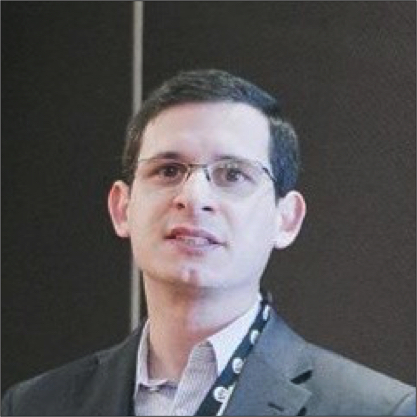
Simone Seminara
Session DINASORE: A Dynamic Intelligent Reconfiguration Tool for Cyber-Physical Production Systems

Authors:

  • Eliseu Moura Pereira, University of Porto
  • João Pedro Correia dos Reis, University of Porto
  • Gil Goncalves, University of Porto
Paper: CEUR link
Abstract: The nowadays industrial digital revolution demands for software driven solutions where reconfiguration is one of the key enablers to achieve smart manufacturing by easy deployment and code reuse. Despite existing several tools and platforms that allow for software reconfiguration at the digital twin / edge level, it is most of the times difficult to make use of state of the art algorithms developed in the most popular programming languages due to software incompatibility. This paper presents a novel framework named Dynamic INtelligent Architecture for Software MOdular REconfiguration (DINASORE) that implements the industrial standard IEC 61499 based in Function Blocks (FB) in Python language for Cyber-Physical Production Systems' implementation. It adopts the 4DIAC-IDE as graphical user interface (GUI) to ease the design and deployment of FBs to quickly and on-demand reconfigure target equipment. The proposed framework provides data integration to third party platforms through the use of OPC-UA. The test scenarios demonstrate that the proposed framework 1) is flexible and reliable for different applications and 2) linear increases the CPU and memory workload for a large amount of FBs.

Eliseu Moura PereiraSession video for session DINASORE: A Dynamic Intelligent Reconfiguration Tool for Cyber-Physical Production Systems Session slides for session DINASORE: A Dynamic Intelligent Reconfiguration Tool for Cyber-Physical Production Systems
Session Bringing Clouds down to Earth: Modeling Arrowhead Deployments via Eclipse Vorto

Authors:

  • Sven Erik Jeroschewski, Bosch IO
  • Géza Kulscár, IncQuery Labs
  • Kevin Olotu, Bosch IO
  • Johannes Kristan, Bosch IO
Paper: CEUR link
Abstract: The design and development of interconnected industrial production facilities, which integrate aspects of theInternet of Things (IoT) or, more specifically, the IndustrialIoT (IIoT) often deals with complex scenarios involving dynamicSystem of Systems (SoS), resulting in large development anddeployment efforts. The Arrowhead community aims at deliv-ering mechanisms and technologies to cope with such complexscenarios. In particular, the concepts of local clouds providing aservice-oriented architecture (SOA) framework for IIoT. Here,a central challenge is the conceptual modeling of such use-cases. SysML is widely established as a standardized modeling language and framework for large-scale systems engineeringand, thus, for Arrowhead local cloud designs. However, SysMLand its Arrowhead profile lacks a canonical way to supportactual platform modeling and device involvement in heavilydistributed IIoT scenarios. The Eclipse Vorto project is ideal forfilling this gap: it provides a modeling language for IoT devicesand comes with a set of modeling tools and already existingreusable templates of device models. In this paper, we proposean approach to integrating Eclipse Vorto models into ArrowheadSysML models. We illustrate the concept with a realistic, yetcomprehensible industrial scenario and also present a prototypeto emphasize the benefits of our novel integration platform.

Géza Kulcsár and Kevin OlotuSession video for session Bringing Clouds down to Earth: Modeling Arrowhead Deployments via Eclipse Vorto Session slides for session Bringing Clouds down to Earth: Modeling Arrowhead Deployments via Eclipse Vorto
Session Model Based Methodology and Framework for Design and Management of Next-Gen IoT Systems

Authors:

  • Xu Tao, LINKS Foundation
  • Davide Conzon, LINKS Foundation
  • Enrico Ferrera, LINKS Foundation
  • Shuai Li, LINKS Foundation
  • Juergen Goetz, Siemens
  • Laurent Maillet-Contoz, STMicroelectronics
  • Emmanuel Michel, STMicroelectronics
  • Mario Diaz Nava, STMicroelectronics
  • Abdelhakim Baouya, University of Grenoble-Alpes
  • Salim Chehida, University of Grenoble-Alpes
Paper: CEUR link
Abstract: Internet of Things (IoT) is a pervasive technology covering many applications areas (Smart Mobility, Smart Industry, Smart Healthcare, Smart Building, etc.). Its success and the technology evolution allow targeting more complex and critical applications such as the management of critical infrastructures and cooperative service robotics, which requires real time operation and a higher level of intelligence in the monitoring-control command for decision-making. Furthermore, these applications type need to be fully validated in advance considering that bugs discovered during real operation could cause significant damages. In order to avoid these drawbacks, IoT developers and system integrators need advanced tools and methodologies. This paper presents a methodology and a set of tools, defined and developed in the context of the BRAIN-IoT European Union (EU) project. The overall framework includes both Open semantic models to enforce interoperable operations and exchange of data and control features; and Model-based development tools to implement Digital Twin solutions to facilitate the prototyping and integration of interoperable and reliable IoT system solutions. After describing the solution developed, this paper also presents concrete use cases based on the two critical systems mentioned above, leveraging the application scenarios used to validate the concepts developed and results obtained by the BRAIN-IoT project.

Xu TaoSession video for session Model Based Methodology and Framework for Design and Management of Next-Gen IoT Systems Session slides for session Model Based Methodology and Framework for Design and Management of Next-Gen IoT Systems
Session NamePresenter NameSession RecordingSlides
Keynote Securing low power device communication in critical infrastructure management

In this keynote, we will present an overview of a secure IoT data transmission ecosystem. This overview will be completed with a concrete example of a water management use case from the Brain-IoT project. In this use case, to ensure high trust in the device’s data, we integrated an end-to-end security layer that is compatible with battery-less devices with high constraints in terms of energy, power computation and bandwidth.

Paul-Emmanuel Brun, Airbus CybersecuritySession video for session Securing low power device communication in critical infrastructure management Session slides for session Securing low power device communication in critical infrastructure management
Session Smart Building Energy and Comfort Management Based on Sensor Activity Recognition and Prediction

Authors:

  • Francesca Marcello, University of Cagliari
  • Virginia Pilloni, University of Cagliari
Paper: CEUR link
Abstract: Thanks to Building Energy and Comfort Managements (BECM) systems, it is possible monitor and control buildings with the aim to ease appliance management and at the same time ensuring efficient use of them from the energetic point of view. To develop such kind of systems, it is necessary to monitor users' habits, learning their preferences and predicting their sequences of performed activities and appliance usage during the day. To this aim, in this paper a system capable of controlling home appliances according to user preferences and trying to reduce energy consumption is proposed. The main objective of the system is to learn users' daily behaviour and to be able to predict their future activities basing on statistical data about the activities they usually perform. The system can then execute a scheduling algorithm of the appliances based on the expected energy consumption and user annoyance related with shifting the appliance starting time from their preferred one. Experimental results demonstrate that thanks to the scheduling algorithm energy cost can be reduced of 50.43% and 49.2% depending on different tariffs, just by shifting the use of the appliance to time periods of non-peak hours. Scheduling based on probability evaluation of preferred time of usage of the appliances allows to still obtain evident energy savings even considering the errors on predicted activities.

Francesca MarcelloSession video for session Smart Building Energy and Comfort Management Based on Sensor Activity Recognition and Prediction Session slides for session Smart Building Energy and Comfort Management Based on Sensor Activity Recognition and Prediction
Session Prescriptive System for Reconfigurable Manufacturing Systems Considering Variable Demand and Production Rates

Authors:

  • Catarina Baltazar, University of Porto
  • João Pedro Correia dos Reis, University of Porto
  • Gil Goncalves, University of Porto
Paper: CEUR link
Abstract: The current market is dynamic and, consequently, industries need to be able to meet unpredictable market changes in order to remain competitive. To address the change in paradigm, from mass production to mass customization, manufacturing flexibility is key. Moreover, current digitalization of the industry opens opportunities regarding real-time decision support systems allowing the companies to make strategic decisions, and gain competitive advantage and business value. The main focus of this paper is to demonstrate a proof of concept Prescriptive System applied to Reconfigurable Manufacturing Systems. This system is capable of suggesting sequences of machines throughputs that best balance productivity, and the impact of the proposed throughput in the degradation of the equipment. The proposed solution is mainly composed of two modules, namely manufacturing environment simulation and optimizer. The simulation module is modeled based on Directed Acyclic Graphs and the second one on Genetic Algorithms. The results were evaluated against two metrics, variation of pieces referred as differential and availability of the system. Analysis of the results show that productivity in all testing scenarios improves, and in some instances, availability slightly increases showing promising indicators. However, further research should be conducted to be able to generalize the obtained results.

Catarina BaltazarSession video for session Prescriptive System for Reconfigurable Manufacturing Systems Considering Variable Demand and Production Rates Session slides for session Prescriptive System for Reconfigurable Manufacturing Systems Considering Variable Demand and Production Rates
Session A Cross-Platform Communication Mechanism for ROS-Based Cyber-Physical System

Authors:

  • Rui Zhao, LINKS Foundation
  • Yenchia Yu, LINKS Foundation
  • Xu Tao, LINKS Foundation
  • Davide Conzon, LINKS Foundation
  • Enrico Ferrera, LINKS Foundation
Paper: CEUR link
Abstract: Recently, one of the main research topics in the context of application of Cyber-Physical System (CPS) in the Smart City and Industry 4.0 scenarios is the one related to the use of Robot Operating System (ROS)-based CPS. Specifically, one of the main interest is to allow a ROS-based smart robot needs to communicate with other heterogeneous Internet of Things (IoT) applications in an intelligent environment to efficiently react to the system requirements and environment changes. However, the communication between the IoT systems will face many challenges and increase the cost and risks that lead to the requirement of a cross-platform communication for bridging the ROS-based CPS and other heterogeneous IoT applications. This paper introduces an OSGi-based adaptor, named the ROS Edge Node, for the interoperability between Robotics domain and other IoT domains, leveraging the highly modular BRAIN-IoT federation, which allows to decentralize, composite and dynamically federate the heterogeneous IoT platforms by leveraging OSGi. Together with the unfixed infrastructure of BRAIN-IoT solution, the event-driven asynchronous communication mechanism realizes cross-platform interaction with ROS-based CPS and solves the major challenges faced. The ROS Edge Node is packaged as a BRAIN-IoT Service with Requirement/Capability in metadata, similar to microservice, to be deployed in a distributed BRAIN-IoT Fabric cluster as a bridge between the underlying ROS-based robotics systems and other OSGi-based IoT systems in various IoT domains via an Asynchronous Eventing Substrate (BRAIN-IoT EventBus). This paper demonstrates the solution developed in an service robotics use case in a warehouse to show how the OSGi-based adaptor enables the fast adaptivity and interoperability between heterogeneous IoT domains in a federated environment.

Rui ZhaoSession video for session A Cross-Platform Communication Mechanism for ROS-Based Cyber-Physical System Session slides for session A Cross-Platform Communication Mechanism for ROS-Based Cyber-Physical System
Session REPLICA: A Solution for Next Generation IoT and Digital Twin Based Fault Diagnosis and Predictive Maintenance

Authors:

  • Rosaria Rossini, LINKS Foundation
  • Davide Conzon, LINKS Foundation
  • Gianluca Prato, LINKS Foundation
  • Claudio Pastrone, LINKS Foundation
  • João Pedro Correia dos Reis, University of Porto
  • Gil Goncalves, University of Porto
Paper: CEUR link
Abstract: Nowadays competitiveness goes through several aspects: digitalization, productivity, environmental impact. Technology is advancing fast and helping industries to obtain more and more detailed data. In fact, the possibility to monitoring and control each part of the process is a strong base on which can be build a more intelligent and focused control. Technology advance brings innovation and possibility to manage the production in terms of "near future" through AI prediction and decision-making support. Forecasting demands and productions, optimizing process by reducing costs and improving efficiency without corrupting the quality of the product is a big challenge at the plants level. Automation, Industrial Internet of Things (IIoT), robotics, cloud computing, AI and more... A problem arises for the industries in the time of researching, getting approval, purchasing and installing new technology, in fact, a faster and better solution may have already emerged. In this paper, a flexible, scalable and fast solution has been proposed to cope such problem and help industries to advance and discover possible optimizations.

Rosaria RossiniSession video for session REPLICA: A Solution for Next Generation IoT and Digital Twin Based Fault Diagnosis and Predictive Maintenance Session slides for session REPLICA: A Solution for Next Generation IoT and Digital Twin Based Fault Diagnosis and Predictive Maintenance
Session Semantic Models for Network Intrusion Detection

Authors:

  • Peter Bednár, Technical University of Kosice
  • Martin Sarnovsky, Technical University of Kosice
  • Pavol Halas, Technical University of Kosice
Paper: CEUR link
Abstract: The presented paper describes the design and validation of the hierarchical intrusion detection system (IDS), which combines machine learning approach with the knowledge-based methods. As the knowledge model, we have proposed the ontology of network attacks, which allow to us decompose detection and classification of the existing types of attacks or formalize detection rules for the new types. Designed IDS was evaluated on a widely used KDD 99 dataset and compared to similar approaches.

Peter BednárSession video for session Semantic Models for Network Intrusion Detection Session slides for session Semantic Models for Network Intrusion Detection

Technical Program Committee

The Technical Program Committee is an independent panel of expert volunteers and as such will do their best to judge papers objectively and on the principle of a level playing field for all.

  • Alessio Angius, ISI Foundation
  • Luca Anselma, University of Turin
  • Paolo Azzoni, Eurotech
  • Alessandra Bagnato, SOFTEAM
  • Peter Bednár, Technická univerzita v Košiciach
  • Ilaria Bosi, LINKS Foundation
  • Paolo Brizzi, Competence Center Industry Manufacturing 4.0
  • Benoit Combemale, University of Toulouse INRIA
  • Davide Conzon, LINKS Foundation
  • João Pedro Correia dos Reis, Faculty of Engineering, University of Porto - FEUP
  • Maria Teresa Delgado, Eclipse Foundation
  • Frederic Desbiens, Eclipse Foundation
  • Charalampos Doukas, Amazon Web Services
  • Juliver Gil, Universidad de Antioquia
  • Laurent Gomez, SAP Security Research
  • Gil Gonçalves, Faculty of Engineering, University of Porto - FEUP
  • Marco Jahn, Eclipse Foundation
  • Prabhakaran Kasinathan, Siemens AG - Cybersecurity Technologies
  • Thomas Krousarlis, INLECOM Innovation
  • Zakaria Laaroussi, Ericsson Finland
  • Konstantinos Loupos, INLECOM Innovation
  • Cesar Marin, Information Catalyst for Enterprise - ICE
  • Yod Samuel Martín, Universidad Politécnica de Madrid
  • Claudio Pastrone, LINKS Foundation
  • Nikolaos Petroulakis, Foundation for Research and Technology Institute of Computer Science
  • Virginia Pilloni, Università di Cagliari
  • Ivana Podnar Žarko, University of Zagreb, Faculty of Electrical Engineering and Computing
  • Mohammad Rifat Ahmmad Rashid, University of Liberal Arts Bangladesh – ULAB
  • Alejandra Ruiz Lopez, Tecnalia
  • Julian Schütte, Fraunhofer AISEC
  • Xu Tao, LINKS Foundation
  • Mark Vinkovits, Pasero
  • Rui Zhao, LINKS Foundation

Organizing Committee

The Eclipse Foundation is pleased to be cooperating on this event with the LINKS Foundation.

General Chairs

Philippe Krief, Eclipse Foundation
Enrico Ferrera, LINKS Foundation

Program Committee Chair

Rosaria Rossini, LINKS Foundation

Publicity

Susan Iwai, Eclipse Foundation

Co-organized by:

Eclipse Research

Supported by:

Brain IoT European Security and Privacy Projects

Co-organized by:

LINKS Foundation

The SAM IoT conference is now over! Thank you for your interest and attendance!

The conference proceedings are available on the CEUR portal.

You can also enjoy the video recordings and slides of the talks. Check the Agenda section.

Contact Us

If you have questions about the conference or the Call for Papers, please contact research@eclipse.org.

  • Eclipse Foundation
    • About
    • Projects
    • Collaborations
    • Membership
    • Sponsor
  • Legal
    • Privacy Policy
    • Terms of Use
    • Compliance
    • Code of Conduct
    • Legal Resources
  • More
    • Report a Vulnerability
    • Service Status
    • Contact Us
    • Support

See what we're up to

Stay up to date

Subscribe to our newsletter

Eclipse Foundation

Copyright © Eclipse Foundation AISBL. All rights reserved.

  • Privacy policy
  • Terms of use
  • Compliance
  • Legal